Google Ads vs Meta Ads: Which Is Right for Your Business?
Google captures people who are already searching. Meta creates demand among people who are not searching yet. How to choose between them, when to use both, and how to split a first budget.

More leads are easy. Better leads are hard. A practical framework for developers and brokerages using Meta, Google, landing pages and WhatsApp to generate enquiries that turn into viewings and deals.

Generating property leads in Dubai is not difficult. Generating leads that answer the phone, book a viewing and eventually buy is. Most real estate marketing budgets are wasted on the gap between those two things: cheap form fills from people who were curious, already working with another agent, or never in the market.
This guide covers the approach we use for developers and brokerages that want fewer junk leads and more conversations with real buyers and investors.
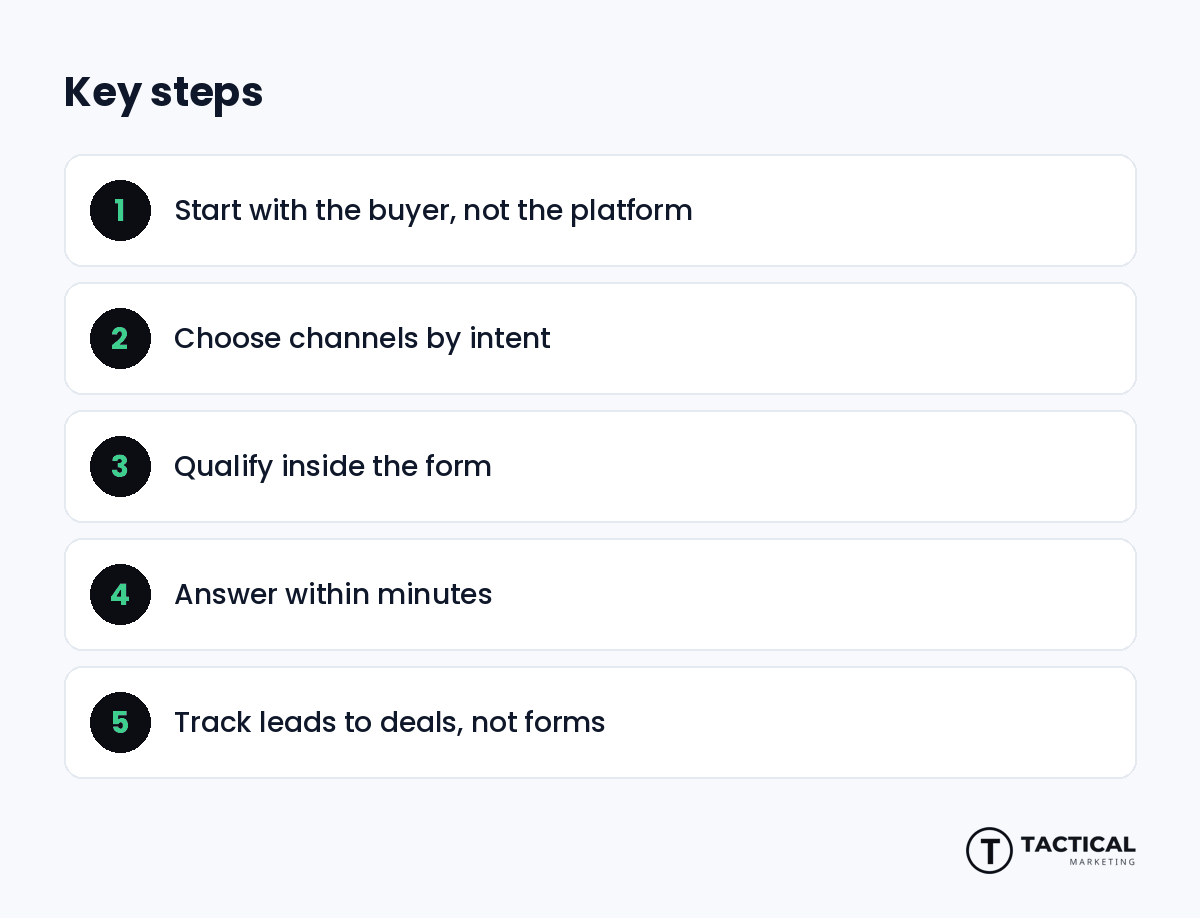
A Dubai off-plan investor, an end-user family looking for a villa and a tenant searching for a one-bedroom flat behave very differently. Before choosing channels, define:
Every ad, page and follow-up message should be built for one of those groups, not all of them at once.
Google Search captures people already looking: searches for a specific project, community or “apartments for sale in” a named area. These leads usually cost more but convert better. Use tightly themed campaigns by project or community and exclude terms such as “jobs”, “rent” (if you only sell) or competitor brand names you do not want.
Meta (Facebook and Instagram) creates demand. It is strongest for new launches, off-plan projects and investor audiences. Instant forms on Meta are convenient but produce many low-intent leads unless you add qualifying questions.
Property portals such as Property Finder and Bayut remain essential for listings. Treat them as a separate channel with its own cost per lead and conversion rate, so you can compare them fairly with paid social and search.
Retargeting keeps your project in front of people who visited the page, watched a video or opened a brochure. Property decisions take weeks or months; retargeting is where many deals are actually won.
The fastest way to improve lead quality is to add friction in the right place. On Meta instant forms and website forms, ask two or three qualifying questions:
You will get fewer leads, but your sales team will spend time on people who are ready. Use the “higher intent” form type on Meta, which adds a review step before submission.
Sending ads to a homepage or a generic listings page loses buyers. Each project or campaign needs a page with:
Make the page fast on mobile and available in Arabic and English if you target both audiences.
Speed of response is one of the biggest factors in whether a property lead becomes a conversation. A lead contacted within a few minutes is far more likely to reply than one contacted the next day, when the buyer has already spoken to three other agents.
A CRM connected to your forms and WhatsApp makes this possible without leads getting lost in someone’s inbox.
Most campaigns are optimized for cost per lead, which rewards cheap, low-quality enquiries. Instead:
When the algorithm is optimized toward qualified leads, it finds more people like your real buyers.
Property advertising in Dubai is regulated. Make sure your ads and pages follow the current requirements from the relevant authorities for permits, project details and broker information, and avoid promising returns you cannot document. Check the latest rules with your compliance team before launching a campaign.
If you want help building a lead engine like this, see our lead generation and conversion service or book a free 30-minute consultation.
Keep reading
Google captures people who are already searching. Meta creates demand among people who are not searching yet. How to choose between them, when to use both, and how to split a first budget.
Twelve questions that separate a real growth partner from an agency that only reports clicks — ownership, tracking, reporting, contracts and pricing, with the answers you should expect.
A step-by-step guide to tracking leads and sales from Facebook and Instagram ads on a WordPress site: the Pixel, the Conversions API, deduplication, testing and the mistakes that break tracking.