Ramadan, Eid and White Friday: Planning Peak-Season Campaigns in the UAE
Peak seasons reward brands that prepare early. A step-by-step plan for offers, creative, budgets, timing and retention during Ramadan, Eid and White Friday in the UAE.
In the UAE, a large share of the year’s online sales happens in a few short windows: Ramadan and Eid, White Friday in November, the Dubai Shopping Festival and the end-of-year holidays. Advertising costs rise in these periods because every brand competes for the same attention. The brands that win are not the ones with the biggest budgets — they are the ones that prepared earliest.
This is the planning process we use with e-commerce and retail clients.
Understand how each season behaves
Ramadan follows the lunar calendar, so it moves about 11 days earlier every year. Shopping behaviour changes during the month: browsing often peaks late in the evening and after iftar, and purchase intent builds towards Eid. Gifting, food, fashion, home and electronics categories usually see the strongest demand.
Eid al-Fitr and Eid al-Adha are gifting and celebration moments. The last days before Eid are the busiest — and delivery cut-off dates matter more than ever.
White Friday is the regional name for Black Friday, used by major marketplaces. Many retailers now run a full week or more of offers, so shoppers compare prices across stores.
Dubai Shopping Festival and year-end bring tourists and residents into a deal-seeking mood, both online and in stores.
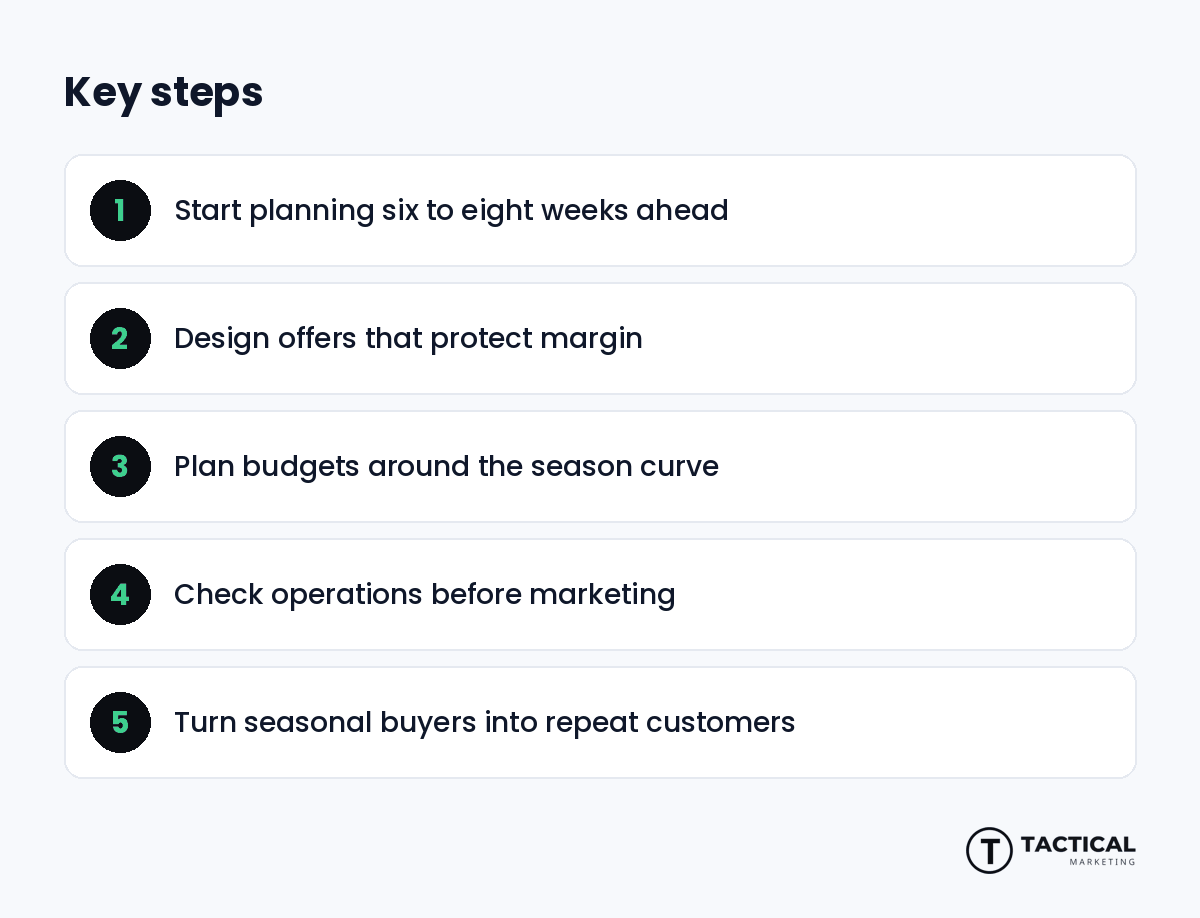
Start planning six to eight weeks ahead
A practical timeline:
8 weeks before: decide offers and stock. Confirm what you can afford to discount based on margin, not on what competitors do.
6 weeks before: brief creative. Plan Arabic and English versions, video and static formats, and seasonal design.
4 weeks before: build landing pages or collections, test checkout and delivery messaging, check tracking.
2–3 weeks before: start warming up audiences with content and soft-launch ads to build retargeting pools.
Peak window: run offers, increase budgets on winners, refresh creative frequently.
After: move buyers into retention flows.
Design offers that protect margin
The deepest discount is rarely the most profitable. Consider:
Bundles and gift sets that raise average order value.
Tiered offers (“spend 300 AED, get 15% off”) instead of flat site-wide discounts.
Gifts with purchase and free delivery thresholds.
Early access for email, WhatsApp and loyalty subscribers, which rewards existing customers and reduces dependence on paid traffic.
Calculate your break-even return on ad spend for each offer before launch, because a bigger discount means each sale must cost less to acquire.
Make creative feel seasonal, not generic
During Ramadan especially, tone matters. Creative that respects the month — family, generosity, gatherings, preparation for Eid — performs better than aggressive sales messaging.
Prepare more creative than usual. Ad fatigue arrives faster when everyone is advertising.
Use Arabic and English versions, and adapt the message rather than translating it word for word.
Show the practical information shoppers need: delivery dates, cut-off for Eid delivery, gift wrapping, payment options.
Use countdowns and clear deadlines in the final days.
Plan budgets around the curve
Costs per thousand impressions usually rise in peak periods. Plan for it:
Build audiences before the peak, when reach is cheaper. Video views and engaged visitors become your retargeting pool.
Increase budgets gradually into the peak instead of switching everything on at once.
Shift spend toward retargeting and existing customers during the most expensive days, where conversion rates are highest.
Keep a reserve to move quickly into the campaigns that are clearly working.
Check operations before marketing
A campaign that sells more than you can deliver damages your brand. Before the season:
Confirm stock levels for hero products.
Agree delivery capacity and cut-off dates with your logistics partner.
Prepare customer service for more WhatsApp and phone enquiries.
Test checkout, payment gateways and discount codes on mobile.
Time your ads with daily behaviour
During Ramadan, look at your own data to see when people browse and buy, and adjust ad schedules and posting times. Many brands find that evenings and late nights perform best, but your audience may differ — use your reports, not assumptions.
Turn seasonal buyers into repeat customers
Peak-season customers are expensive to acquire. Make the most of them:
Send a thank-you and order update sequence by email or WhatsApp.
Ask for reviews once the order has arrived.
Invite them back with a relevant offer a few weeks later.
Add them to a customer audience so you do not pay to acquire them again.
Peak-season checklist
Offers chosen by margin, with break-even ROAS calculated
Creative briefed six weeks ahead, in Arabic and English
Twelve questions that separate a real growth partner from an agency that only reports clicks — ownership, tracking, reporting, contracts and pricing, with the answers you should expect.
Most ad budgets are lost after the click. A practical 15-point checklist for landing pages that turn paid traffic into enquiries: message match, speed, proof, forms, WhatsApp and tracking.
How to set up, test and scale Facebook and Instagram ads for an online store in the UAE — tracking, account structure, bilingual creative, offers and the numbers to watch.